

As expecting parents, you must be so full of joy right now! Planning your baby’s future can be incredibly exciting, whether picking the perfect color for their nursery or shopping a ton of baby essentials. However, amidst all this excitement, deeper questions about safeguarding their health can take over and that is where the question of whether you should preserve your baby’s cord blood stem cells comes. After all, you never know when life throws a curveball at you and your baby ends up needing a cord blood transplant.
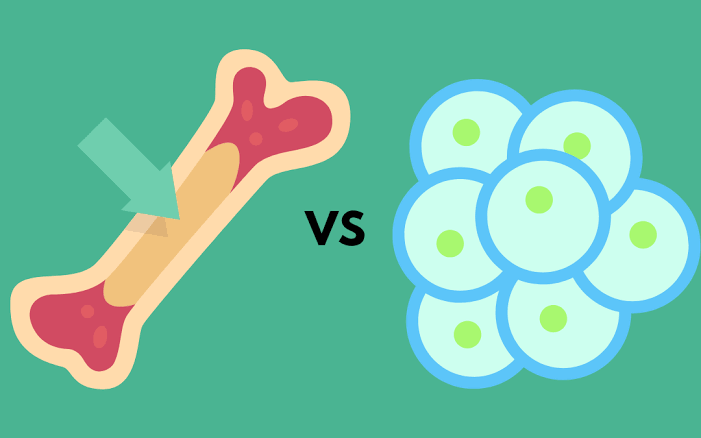
For aeons, the only treatment for blood disorders, inherited or otherwise, has been a bone marrow transplant. But we all know how difficult that can be. Fortunately, in recent times, cord blood transplant has proven its effectiveness as a more viable treatment option against life-threatening ailments such as leukemia, sickle disease, and more. In today’s article, we’ll stack the two against each other to see which of the two is a better choice when push comes to shove.
Understanding Bone Marrow Transplant
Bone marrow transplant has been the standard treatment for blood disorders and cancers. This treatment option involves deriving stem cells from the bone marrow of the donor. The bone marrow is the soft, spongy tissue that is found at the very centre of all our bones, and it is basically a factory of blood production. 95% of all our blood cells come from here so the analogy is not an exaggeration.
Anyway, coming back to the point, the deeper parts of this tissue are quite rich in hematopoietic stem cells or cells which are capable of morphing into healthy red blood cells or white blood cells or platelets. However, the bone marrow’s ability to churn out stem cells can be severely hampered due to cancers and aggressive treatments like chemotherapy, necessitating a bone marrow transplant.
Bone marrow transplants are invasive procedures that are of two major types – autologous and allogeneic. Autologous transplant is extremely expensive and involves extracting stem cells from one’s own bone marrow, while allogeneic involves harvesting it from a donor.
Defining The Power Of Cord Blood Transplant
Cord blood transplant is the modern alternative to bone marrow transplant and the two could not be more different from each other. Derived from umbilical cord blood immediately after the birth of your child, it is a minimally invasive and completely pain-free method to harvest stem cells. After all, the blood is only collected once the umbilical cord has been cut, which means neither you, nor your baby will feel a thing.
The good part is that the stem cells collected from cord blood are the same life-saving hematopoietic stem cells that are found in the bone marrow, which means they can be safely used as an effective treatment against a wide variety of diseases including blood disorders, immune disorders, metabolic disorders, heart conditions, and much more. Plus, the odds of finding a donor match are higher with stem cell banking – especially if you opt for community stem cell banking.
Clinical Advantages Of Cord Blood Transplant
Although both procedures have the same goal, cord blood transplants offer distinct clinical advantages which give them an edge over bone marrow transplants:
-
Immunologically Naive Cells: Since cord blood stem cells are harvested at birth, they are immunologically naive, which means they have never been exposed to environmental toxins, viruses or infections. This makes them more adaptable, i.e. they do not have to be a flawless genetic match to be an effective treatment option.
-
Reduced Risk of Serious Complications: Since cord blood cells are very adaptable, the resultant transplants automatically carry a reduced risk of Graft-versus-Host Disease (GvHD). GvHD is a severe, life-threatening complication of transplants in which donor cells attack recipient cells, viewing them as foreign objects that must be destroyed.
-
Immediate Availability: Finding a bone marrow donor that is a flawless genetic match is an extremely time-consuming and difficult process. In contrast, accessing cord blood stem cells is almost instant as you can request access to your deposited units any time you need.
-
Enhanced Post-Op Recovery: According to a study conducted by the University of Minnesota Medical Center, patients who received cord blood stem cell transplants continued to experience smoother recovery as opposed to those who underwent bone marrow transplant.
Conclusion
Cord blood transplant is safer, more cost-effective, and promises healthier long-term outcomes. So for expecting parents, the choice should be clear. Investing in stem cell banking is equivalent to taking out a biological insurance policy that gives you greater peace of mind and guarantees a healthier future for your child. Save them at birth and earn a vital lifeline in the game of life.